Wobs Gather in Denver for the 2026 Organizing Summit and Social
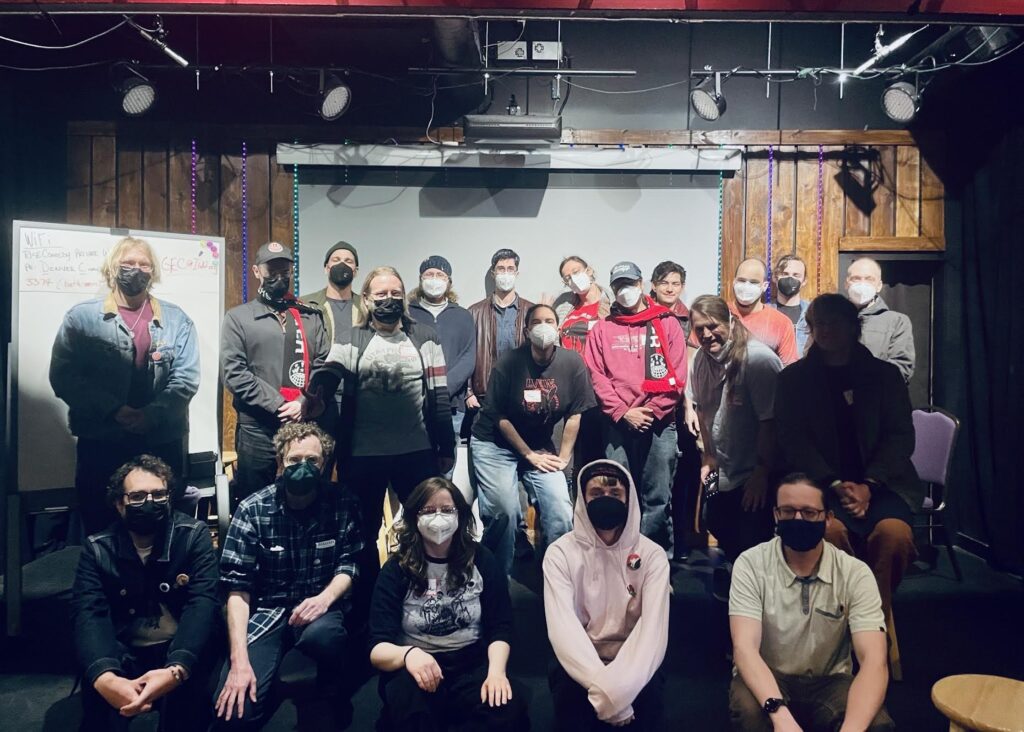
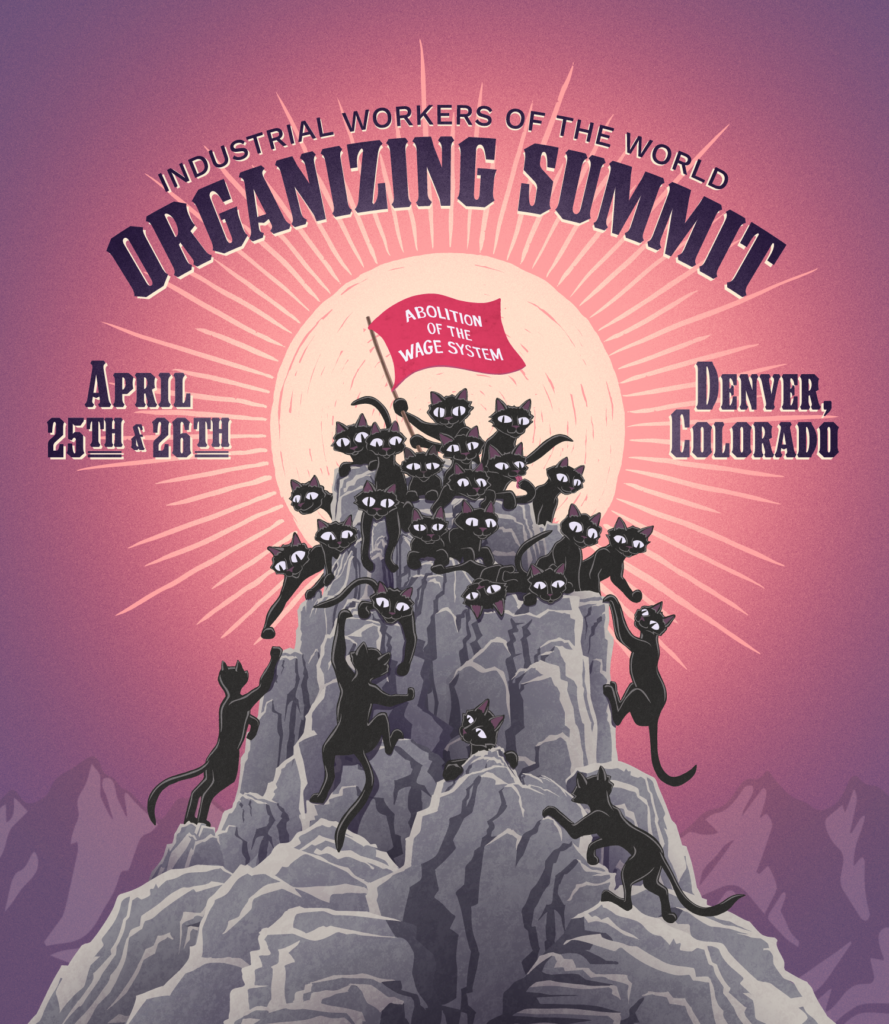
On April 25th and 26th, Wobs from cities ranging from Seattle to Boston gathered in Denver, CO for the 2026 Organizing Summit and Social. Hosted by the Denver GMB, the summit was open to Wobblies in good standing who have completed the Organizer Training 101 (OT101). The two-day Summit saw Wobs from various branches give presentations and hold discussions on everything from External Organizing in Mission Driven and Non-Profit workplaces to the importance of sharing current organizing stories and replacing ourselves as both organizers and leaders. With a couple dozen members in attendance, the discussions were lively, the debate respectful yet deliberate, and the overall spirit of the weekend was one of community and shared experience. For this Wob, it was my first organizing summit, and I left impressed with the dedication and discipline of so many of my fellow workers.
Meeting at Rise Comedy Club in Downtown Denver’s Ballpark neighborhood, workers gathered at the improv comedy space at 8:30am for breakfast. Denver hosted an introduction and orientation session, giving a local organizing committee update of current campaigns and other regional efforts.
Fellow Workers Tegan and Jeff cohosted the first session on Solidarity Unionism, focusing on the big picture mission of solidarity unions and effective strategies for building solidarity on the shop floor. When discussing strategies after the fact, Fellow Worker Devin James Fry noted, “Until [workers] start talking in earnest with other workers, a lot of working class people don’t even realize how angry they are, or why. It’s healthy and productive to acknowledge the anger and start working together to do something about it. Infinitely better than stewing alone.” That shared experience is one of the tenets of organizing a “democratic workplace committee” as it is sometimes described. While Wobs may disagree on exactly parameters of a solidarity union, the emphasis on finding common ground in the working class experience permeated nearly every session and conversation of the weekend, with more than one attendee noting that organizing is a non-partisan affair. Many also shared experiences that “right wing” co-workers are often closer to joining a solidarity union than their liberal elite or professional managerial class cohorts.
To that point, FW Chris Jones recalled his own journey of gaining class consciousness. “My understanding of class developed through talking to workers in other industries, exposing that we have a central problem here.” While for some it is obvious enough that we must talk to our coworkers through one-on-ones and shop floor discussions, many side conversations over coffee and lunch were had about the practice of organizing solidarity. As FW Chris Jones put it, “The best way to organize is to “be a human being [and] be honest about how the wage system has affected you.“
After a brief lunch break I gave a lecture on Colorado labor history and how it informs the current landscape of labor in our state. Afterwards, we broke up into pairs, for practice one-on-one sessions and an Organizing Liaison Department chat, both of which covered personal experiences of agitating and organizing on the job.
One of the weekends’ highlights concluded the first day with a somewhat difficult but important discussion on how to be an external organizer without being a knock-off business union. Led by a panel, the topic quickly ignited a group conversation with nearly everyone in attendance adding something of their own experience.
FW Chris recalled that it was his favorite conversation of the summit.
“For me, being a Wobbly includes being an EO. Your whole purpose is to support other people organizing whether it’s at your workplace or not. We have a lot of opportunities to bring people into the IWW instead of isolating them with a professional organizer, this is a really important conversation in my mind.” FW Chris Jones continued, “Who is not an EO,” challenging union members to remember that we are all organizers, and that the “IWW is an organizers union.” FW Chris Jones also noted that being an EO is about mentorship, that it is an “opportunity for new member development, right from the rip. Everything we’re doing, we’re showing somebody else how we’re doing it.”
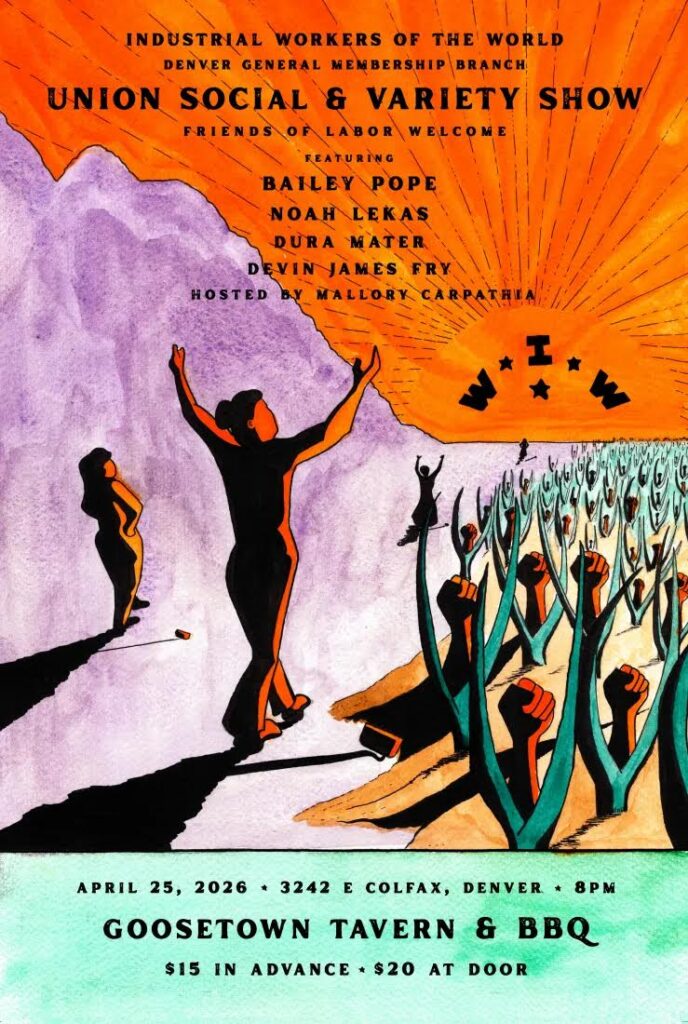
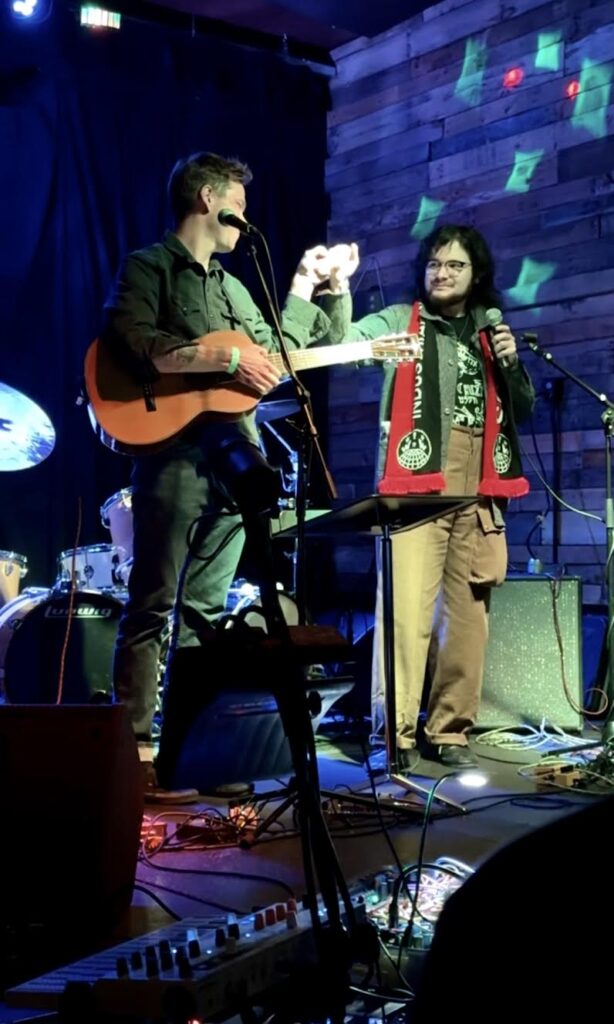
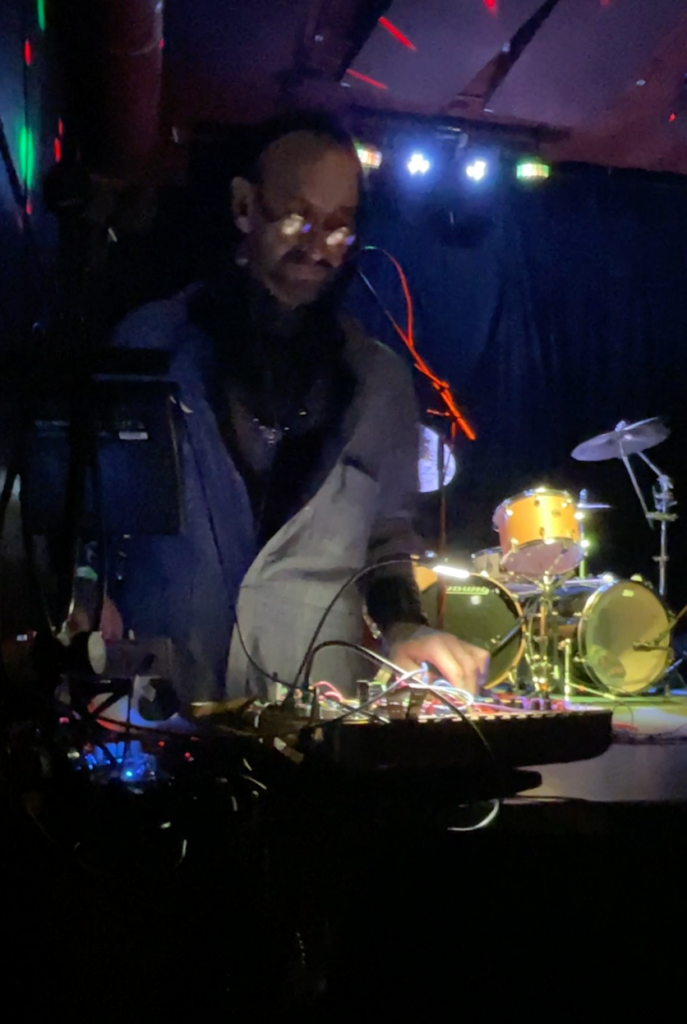
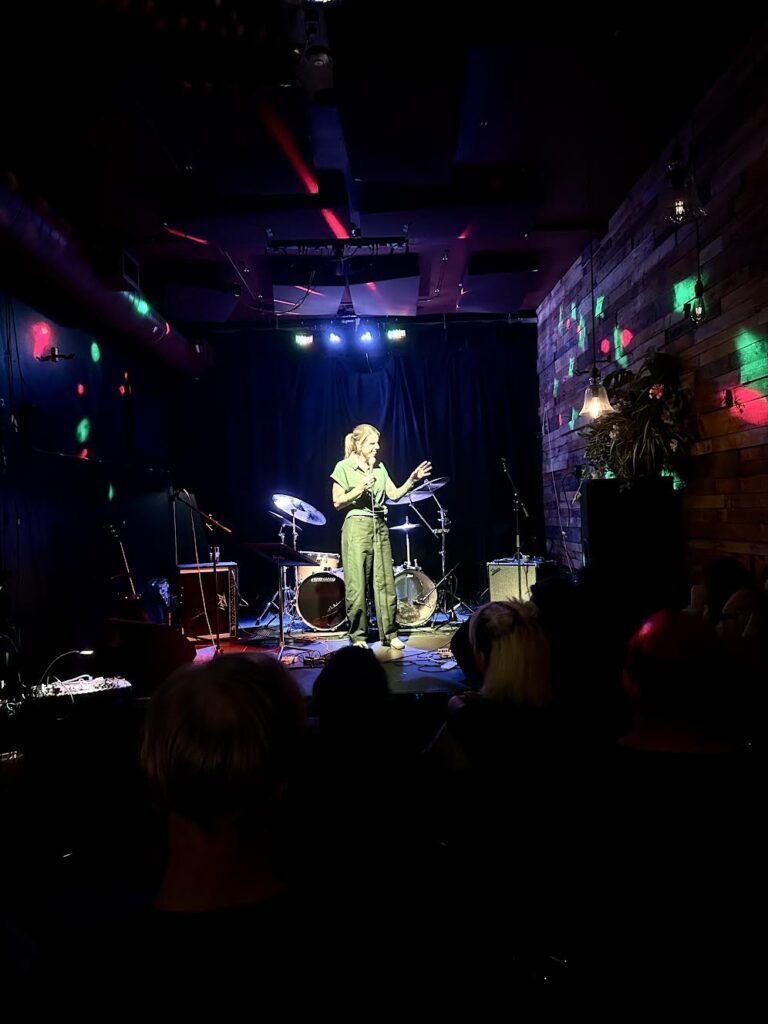
That evening, Wobs, friends of labor, community members and random passersby gathered at the Goosetown Tavern for the Union Social and Variety Show. Hosted by Denver branch member FW Mallory, the evening featured performances by hardware musician Devin James Fry, folk singer Noah Lekas, comedian Bailey Pope and band Dura Mater. As FW Devin James Fry recalled, “I love hearing Wobs get deep in conversation, but my favorite part of the weekend was seeing workers from other unions mingling and chatting with Denver IWW members at the social.” A highlight for this writer was being joined on stage by fellow branch member FW Alejandro who helped lead everyone in attendance through a spirited version of Ralph Chaplin’s “Solidarity Forever.”
Day two started with ODB updates followed by FW Tim N. sharing insights on how organizing helps to build new branches. The next session focused on starting where we are at. As one attendee put it, “You go to war with the army you have, not the one you want.” These conversations proved extremely valuable in terms of keeping everyone focused on practical organizing efforts. There are a lot of distractions and causes to get aligned with, but for Wobblies focused on organizing, these conversations proved a moment of clarity, like a north star, keeping practical goals at hand and a deliberate path under foot.
Perhaps the most lively conversations and interesting disputes happened after lunch on the second day. As FW Jonathan from the Boston GMB noted, “I was looking at everyone’s faces and realized that I thought I had heard something from everyone. Seen everyone take the mic. And not just once. Which said to me that this was everyone talking and sharing with everyone else. Which I realized was a very good thing to see and notice and not always true, but is great when it is.”
FW Tegan from the Seattle GMB led a great session on being a “real” union, which deconstructed many of the arguments against solidarity unionism while arming workers with arguments and ideas for communicating the benefits of joining the IWW instead of a business union. When so many workers see all unions as a monolith, differentiation can be difficult. But FW Tegan shared many indelible bits of interest, not least were keys for avoiding burnout, building confidence in your organizing skills and standing steadfast in the greater IWW mission.
The IWW mission has always involved storytelling. If Wobblies are anything, we are fans of a good yarn. However, many of our favorite stories are well worn if not dated. But having fresh stories has always played a part in our union’s organizing efforts. FW Ryan led a discussion on how to gather better organizing stories by leveraging the four-part STAR method of situation, task/demand, action and result framework.
When gathering stories, you ask,
What is the situation at your workplace?
What are your demands to fix the situation?
What actions did you take to secure that demand?
What were the results or agreed resolutions that were implemented?
The sum of these four questions provides a quick and pragmatic framework for organizing stories. As Wobs, our songs and stories steel our spines and motivate us to keep working, and gathering more of these stories will only create more bridges between workers and build better maps for navigating our workplaces.
Day Two concluded with a session on investing in other Wobblies, training our replacements, and organizing our way out of a job. “We hope some of you will be up here next year leading,” FW Tegan said at one point from the stage. And while that spirit permeated every aspect of the weekend, it certainly put a button on day two.
“For me one of the key things of all our summits is the chance to meet, greet, hang, listen, and network with fellow active organizers. ‘We all learn by doing,’ of course, but we also learn from each other,” summarized FW Jonathan.
As a first time attendee, presenter and performer, I left feeling a foot taller and inspired. There are organizers across this country putting in real work, learning real lessons, and in my experience, they are happy to share their stories and a bit of advice, regardless of how new or seasoned of a Wob you might be. All we need to do is get into the same room now and again to have these conversations.
Haz clic aquí para leer en español.