Minneapolis shows us why we should organize at work
My first protest as an adult was part of the wave of anti-Iraq War protests across the US in 2003. I was part of a crowd of over 100,000. It felt good to know there were so many of us, that I wasn’t alone in my anger with what my government was doing. George W. Bush had just been inaugurated as the president and I didn’t know a single person who had voted for him.
The war went on just like it would have if we hadn’t done a thing.
After that, I rarely went to protests. If such a massive group of actions hadn’t changed anything, why would the small rally organized by local activists be any different? I wanted so many changes in the world, but I didn’t see a point in fighting, because there was no way to make a difference.
Then Trump was elected president for the first time. I worked in Big Tech, and suddenly, other workers in my professional networks were asking: what can we do if he asks our employer to build the “Muslim registry” he’s been talking about? We could all see the courts failing to stand up to the administration, and from inside, we were suddenly aware of our power. To most people, the biggest tech companies were like the government was to me: huge organizations that we have no power over, that we try to protest and vote out and boycott and see no change. But us workers in the industry understood that a few thousand people, or sometimes as few as hundreds, could do what millions couldn’t, if they were the workers who built the cloud and the social media platforms.
Getting a thousand people moving in the same direction is still a huge task. When I joined an IWW organizer training for the first time in 2018, I finally learned how to do it. I saw how organizing on a small scale could transform people’s lives. How even though I still might not be able to change what a politician did, I could have power over the place I spent 40 hours a week.
Before getting involved in workplace organizing, I wasn’t a centrist. I didn’t know what to call myself, because I wasn’t sure what should come after capitalism, but I was pretty sure I thought there needed to be an “after.” But I didn’t see much of a point in reading political theory or talking to my friends about those ideas, since I couldn’t do anything about them.
I see my experience echoed in the stories I’m hearing from Minneapolis. After the surge of federal police snatching people off the street, from workplaces, schools, and homes, there have been an explosion of reports from locals about how politically inactive people have been getting involved. Bluesky user Nick Bednar shared an archetypal example of these stories: “Someone in their mid-50s today told me that this is the first time he had thought about or been affected by politics. And that guy is actively guarding buildings and his coworkers from ICE.”
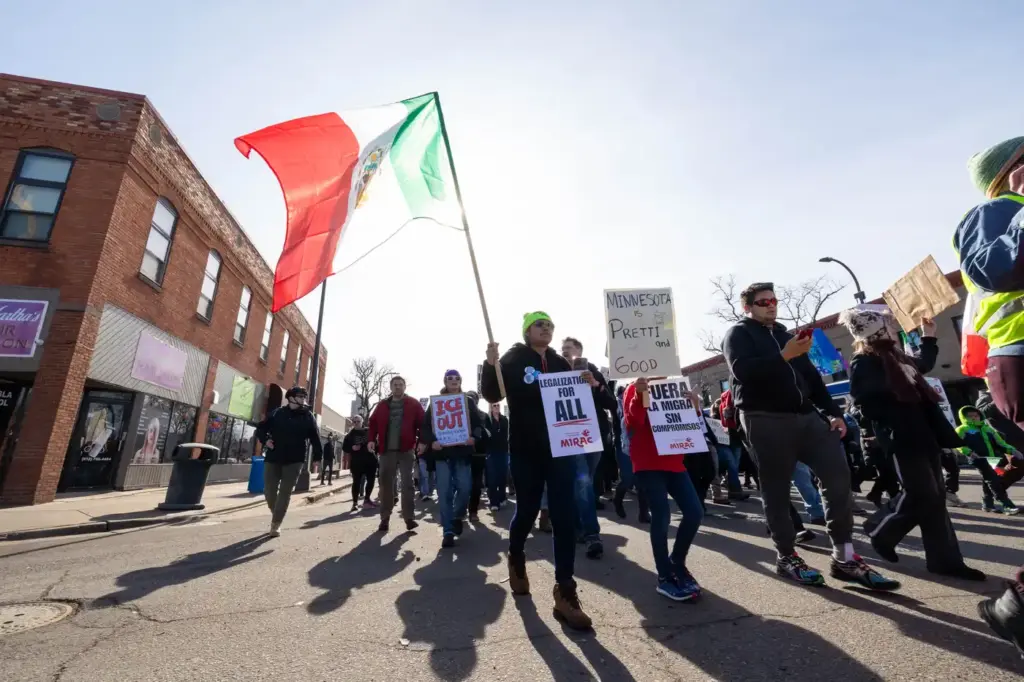
There are protests across the US against ICE and at ICE facilities, but the response to the surge in Minneapolis is something different: everyday people organizing rapid response networks, bringing food to neighbors who are afraid to leave their homes, searching for and following ICE in their vehicles, blowing whistles and setting off car alarms to alert neighbors, and even surrounding officers and physically obstructing arrests. These are not protests, they are direct action. And although they have little hope of forcing the occupation of Minneapolis to end, they are making a much more tangible difference. Every hour of officers’ time spent evading or harassing observers is an hour they’re not tracking or kidnapping people. Every interruption of an action has a chance of letting someone escape arrest, imprisonment, deportation.
So what’s the difference between a protest and this kind of direct action? The difference isn’t whether people believe these things are right or wrong, or even whether they see the government as unjust. The difference is in whether they think their actions can meaningfully change the situation. The difference is in whether they think they can win. As Alyssa Battistoni wrote in their powerful piece “Spadework” on union organizing as a student worker:
“Your job as an organizer was to find out what it was that people wanted to be different in their lives, and then to persuade people that it mattered whether they decided to do something about it. This is not the same thing as persuading people that the thing itself matters: they usually know it does. The task is to persuade people that they matter: they know they usually don’t.”
One thing I’ve learned through workplace organizing and talking to others about organizing is that people often seem apathetic because they have no hope. A coworker once told me they were concerned about something happening to other workers at our employer, but “what’s the point, because no one else here cares about this.” I had just talked to another coworker who told me they cared about the same issue! When the issue is that someone else is being harmed, the shutdown can go even further. We are made complicit in the harm our employer is doing at work and the harm our government is doing in general. We feel on some level that we benefit from this harm. “I get a wage, don’t I?” “I’m lucky to be a citizen when so many people are sacrificing everything to move here.” But when we don’t feel we can do anything about it, all we can do is not think about it. To forget we care about it.
What happens when we’re offered an opportunity to do something about it? Whether that’s standing up for our coworkers or alerting our neighbors to ICE’s presence, it breaks through that apathy and fear and shame. It engages people who have never been “political” before. It’s bringing hope. And it turns out that people will risk a lot once they have that hope. People who have never in their lives showed up to the most mild, permitted protest are risking theirs to confront armed police who have already murdered two white citizens just for getting in their way. They may not be abolishing ICE, but the real possibility of saving one of their neighbors is enough.
What about those of us who don’t live in Minnesota? ICE isn’t going to do this everywhere, and it would be terrible to wish they do it anywhere else. But most adults in North America do have jobs. Organizing our coworkers to confront management together doesn’t even come with a risk of getting sprayed with chemical weapons. I’m sure many IWW members are inspired by the bravery of the people in Twin Cities standing up to power, and thinking about how best to continue their work elsewhere. Our first instinct might be to protest, but I think the best way to honor the lessons and the fight is to take it to work. To bring hope, one person at a time, that we can change our lives and stand up to power when we do it together. That we matter.
Disclaimer: The opinions expressed in this article are those of the author. They do not purport to represent that of the IWW or Industrial Worker as a whole.