
Working Class Questions and the Power of Collective Hope
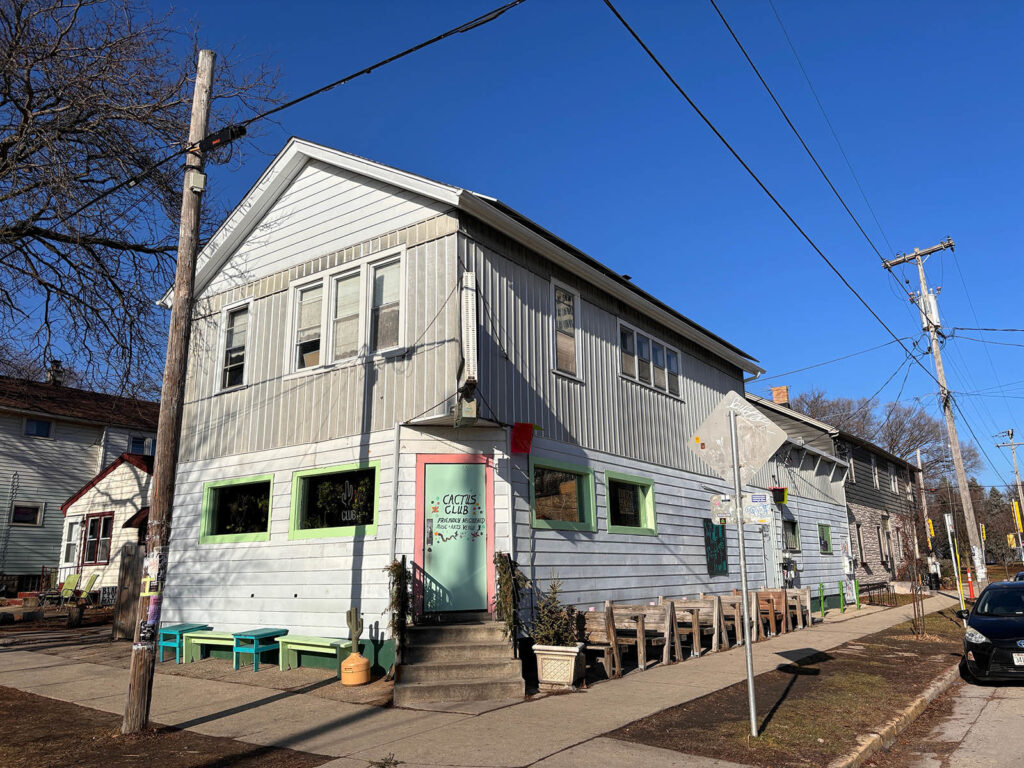
In the early twentieth century industrial workers in the Bayview neighborhood of Milwaukee would congregate at a local saloon, now known as the Cactus Club, to read radical literature, sing songs and play instruments, and host the occasional speaker as members of an anarchist book club. These workers were of the same ilk and residents of the same neighborhood as those who had organized and fought (including the death of seven marchers at the hands of the State Militia) for the eight-hour workday in 1886. Despite ten-hour days of strenuous labor six days a week these workers spent their evenings and their one day off spending time together in leisure and solidarity. If any group would have been justified in refusing these gatherings in order to rest and relax in their homes in what little free time they possessed—this was the one. Instead, these people saw their gatherings as an oasis of refreshment as they built community and organized.
Now consider the modern working class. Our workdays tend to be shorter, our labor not as physically strenuous, and our leisure time more abundant than our peers from the early twentieth century. And yet our commitment to building community and organizing for a better world looks nothing like that of our fellow workers from days gone by. We have television shows to catch up on and the constant temptation of social media. We have 24/7 access to email which reattaches us to work even when we are off the clock. In addition, we have pop psychology which reminds us that “it’s ok to say no” to social engagements and that “protecting our peace” is the most important thing we can do. And while this can serve as a healthy reminder for those who push themselves too much it can also be an excuse for those who don’t want to grow and refuse to challenge their own comfort zones.
In my opinion, guilt and shame are futile motivators that fail to light the necessary fire that creates a sustainable and vibrant community and working-class organization. So, I am not seeking to appeal to either. But I am intrigued and perplexed by the motivation of our working-class siblings from the early twentieth century who, while no doubt being tired and sore, put their gathering together above just about any other activity at their disposal while today we feel too tired and emotionally drained to gather at all. I can already sense the defenses of many of my working-class peers coming to the fore. After all, we live in late-stage capitalism. We live under a president who is sending out the National Guard and Federal troops onto American soil. We live in an age of increasing income inequality and the resurgence of white supremacy and racism.
In July of 1894 Grover Cleveland sent Federal troops from Fort Sheridan, twenty some miles to the north, to the city of Chicago to oppose the Pullman strike and boycott. Workers in that city and all over the country, despite a yearlong depression and largescale wage reductions and unemployment, went on strike in solidarity with their fellow workers at the Pullman manufacturing plant who had gone out on strike in May. This strike was led by the indefatigable Eugene Debs and was carried out by members of the American Railway Union who found time, long workdays notwithstanding, to organize and sustain hundreds of locals within the first year of the Union’s existence. This was the same Eugene Debs who endured long periods of travel and multitudinous deprivations to organize his fellow workers but made it a point to get home for Sundays in order to spend the day reading poetry, singing songs, and recreating with his family and friends.
There was something different back then that we are missing today. Dare we say that we have it worse than they did? Or perhaps they had it so much worse than us that utter desperation became the spark that lit the fire of practical solidarity. Maybe once our desperation reaches the same level we will be moved out of our comfort zones. However, I have a feeling that desperation, at least on its own, isn’t much more effective than guilt and shame.
Perhaps those early twentieth century radicals had a compelling positive vision of what was possible if only they organized and built community. Or maybe they truly felt the reality of the new world they were seeking to create in their fellowship. Perhaps their lack of entertainment options made social gathering more appealing and exciting. In a day when social justice warriors abound with quick and easy answers it is not my intention to give one at all. My goal is simply to share the questions that have been on my mind. What was so different back then? What motivated them to organize with such energy and passion? Is it possible to find comparable motivation today? If so, how? If we gathered, sang songs, and read poetry and radical literature to one another would we soon discover some answers? Please consider these questions with me.
In regard to the labor movement of the current moment we see signs of resurgence as well as a cultural shift in public attitudes toward unions and organizing. Just a few years ago UPS drivers, under the Teamsters’ banner, won an historic contract after an intense battle with management. And just last year Volkswagen workers in Chattanooga, Tennessee voted to unionize under the UAW banner. Furthermore, a July, 2024 report by the Economic Policy Institute indicated growing support for unions but also revealed a level of “uncertainty” about what organizing entails. This support and “curiosity” are especially strong among the younger generations who are still in the early stage of their working lives or have freshly entered the workforce. But how do we, as the labor movement, channel this interest and support into tangible organizing efforts that succeed that stand the test of time?
Evidence of union victories and growing support for union organizing are hopeful signs. But as my Anthropology Professor at the University of Wisconsin-Milwaukee Dr. Mark Freeland points out, “hope is not a good methodology.” We need more than hope. We need action. Nevertheless, hope can propel us to take concrete action and sustain us as we do the hard work of organizing like a spark that lights a fire and like fuel which sustains it. There is an epidemic of hopelessness and a deep sense of the heaviness of late stage capitalism which blankets the collective shoulders of the working class–especially the younger generations. I have felt this many times and many times I have buckled under the weight. So, while hope alone is not enough, action without hope and the fire of solidarity is hollow and destined to fail.
But where do we find hope in a cold world of division, exploitation, and alienation? We don’t find it from our employers or from the major political parties. We don’t find it in the coverage of mainstream media or the dominant narratives of empire. But we do find it with one another if we dare to try and allow ourselves to be vulnerable with one another. This takes trust. This takes a genuine belief in solidarity. This means taking chances. Yes, we must have boundaries. Yes, we should maintain self-care. But we also must wade back into the waters of collective gathering and practical lived-out solidarity. Because it is here that we discover far more than coping tools. We discover the motivation and tools for organizing toward collective liberation. Together we can chart the path forward as we learn from one another and lean on one another. I recently visited the Eugene Debs museum in Terre Haute, Indiana and reread Ray Ginger’s romantic biography of Debs entitled The Bending Cross. And in that museum and in that book I rediscovered hope and rekindled a fire that had grown cold and was smouldering in the ashes of apathy and hopelessness. A comrade from a century ago, now beyond the veil, was able to stir something in me again. Imagine what we can do together as we gather, as we share our longing for a new world, and as we take collective action to make that new world a reality here and now. The fire that burned in Eugene Debs and in the anarchists who gathered at the Cactus Club in Milwaukee has not left the earth. You have a flame and I have a flame and when we gather together our mingled flames have the potential to become a mighty blaze that burns away the fetters of alienation, exploitation, hierarchy, and all of the abuses and failures of capitalism. Hope is not the end. But it very well may be the only suitable beginning.
This article originally appeared in the 2025 Autumn print edition of Industrial Worker.
Bitte klicken Sie hier um deutsch lesen.