“Today is not June 27th, 1905 [the founding date of the IWW]. The world has moved forward, of course, but for many people in the working class we have moved backward. Our class is less organized. If anything, the present is as much or more like the 1880s than 1905.
It’s not 1905. Our present tasks are not much like the tasks of the people who founded the IWW. Our present tasks are more like the people who worked to form the initial unions who later merged to form the Western Federation of Miners (WFM). June 27th, 1905 is a long term goal.”
– Weakening the Dam, Twin Cities IWW, 2011
Weakening the Dam is one of my favorite pamphlets produced by the IWW (if you haven’t read it yet, I highly recommend it). Its sober and realistic perspective on the position of the modern-day working class is invaluable to our mission as a revolutionary union. We have to be honest with ourselves if we want to achieve our goals.
When we talk about workplace organizing, we often refer to the “organizing pyramid” which places “understanding the workplace” at the bottom because understanding the workplace is the most fundamental step of any organizing campaign. The same is true of the task at hand, namely rebuilding an IWW that has the power to transform society. We must first begin by understanding the current position of our class and also the relationship of the IWW to the broader working class. This is one question that I think Weakening the Dam fails to discuss.
Connecting with Other Organizers
The reality today is that the IWW is largely viewed as irrelevant and/or a “thing of the past” in a lot of communities across the country. This is what I hear from folks in communities all across the United States. For example, I was on a UFCW picket line the other day talking with some staff organizers from all across the country. I learned about them, their stories, and how they came to become staff organizers with the UFCW. Many of them were young, rank-and-file worker-organizers in the cannabis industry. Some were DSA members as well and involved with their Emergency Workplace Organizing Committee (EWOC) program.
They talked about how much they love the UFCW’s industrial cannabis organizing committee, and how cool it was that the UFCW brought them on to organize other cannabis stores across the country, just like how they organized their own workplaces. Sound familiar?
I also asked them how the IWW is perceived back in their various hometowns and many of them reported to me that their local branches are very insular and the broader organizing community doesn’t really know who they are or what they do. It’s almost like they don’t exist.
This is just one example, but it’s representative of many conversations I’ve had with non-wobbly organizers in the past couple years at Labor Notes 2024 in Chicago, at Movement School in Minnesota, at other picket lines, at other places and events I won’t mention here.
This is my point: we have to pretend like the IWW doesn’t exist. We need to do better integrating ourselves into the organizing ecosystem that we exist within if we want to grow and become relevant as an organization. We have to become visible and relevant.
Young labor radicals are being eaten up and burnt out by electorally focused groups like DSA and reformist business unions like UFCW, and if they don’t know about the IWW or if they don’t believe we’re doing effective organizing, then this will continue to be the case.
I’ve spoken with wobblies in other branches who have admitted losing many amazing organizers to groups like DSA.
The Ypsilanti IWW was in a similar position a few years back. No one knew we existed, what we had to offer, or what we believed in. We understood the position that we were in and were intentional about changing it. I’ll offer a short list of things that we have done:
- Volunteering time, money, and labor to the free local monthly community brunch every month.
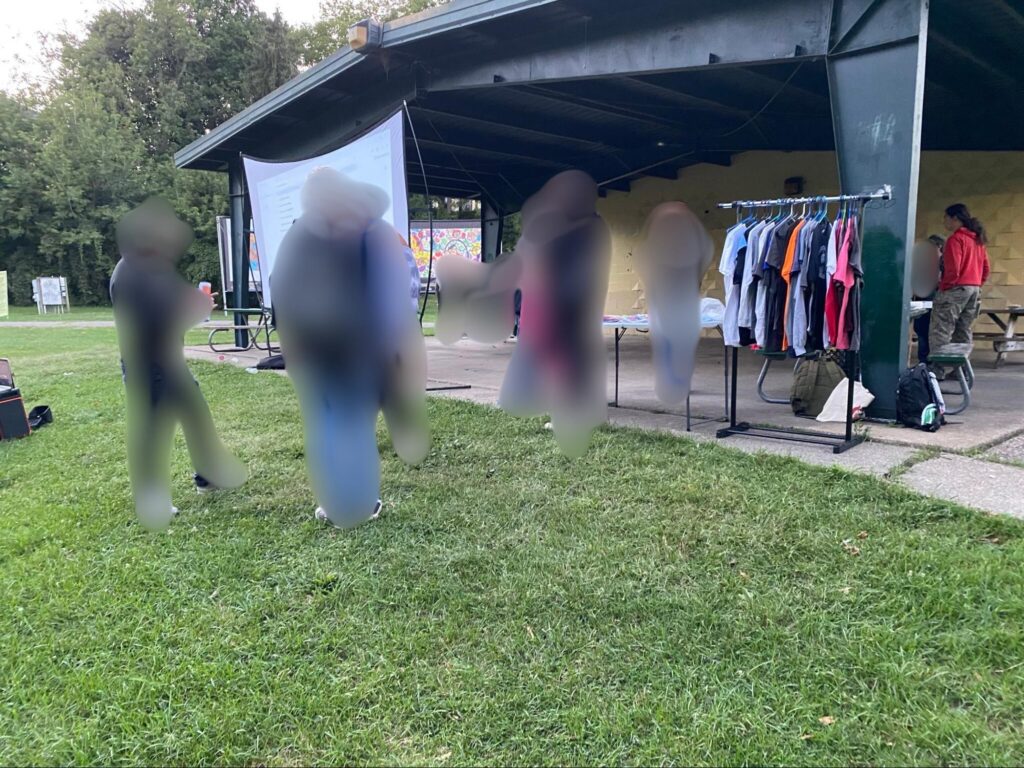
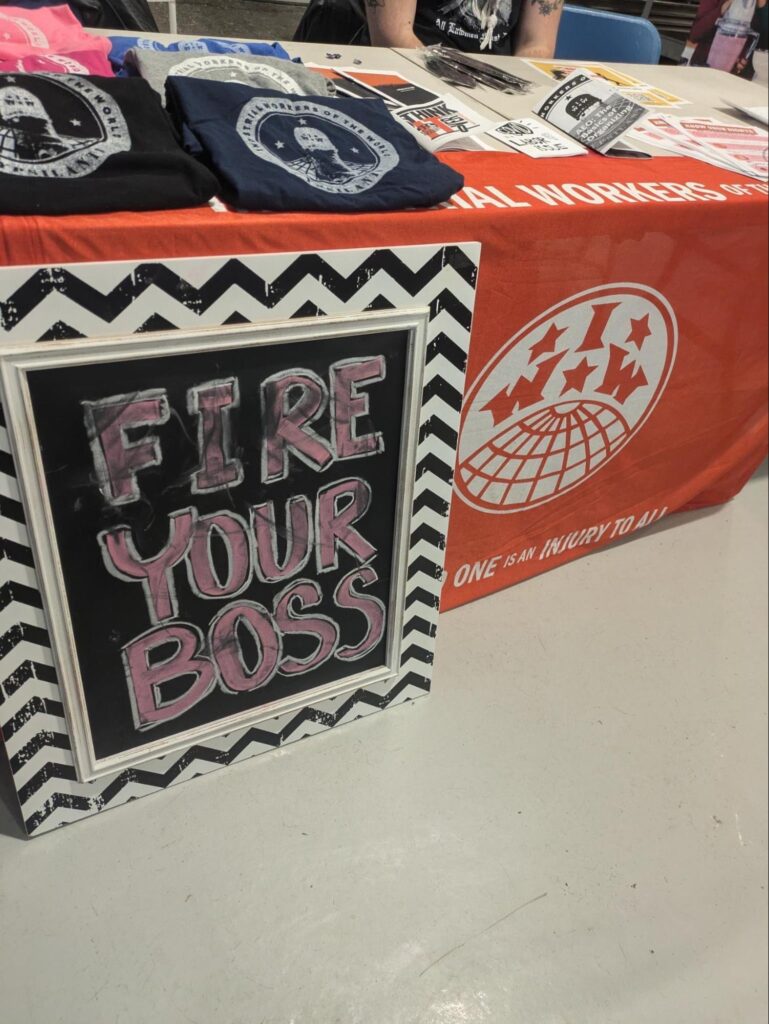
- Tabling at local music events, festivals, and grassroots political projects like the monthly Pull Over Prevention in our area
- Collaborating with other radical labor organizers in the area who may not be in the IWW yet. For instance, we recently put on an Organizer Retreat with the local grad workers’ union in the area and introduced the ideas of solidarity unionism and industrial unionism to a room full of 30 or so people, many of whom weren’t wobblies at the time. Some of them joined right then and there at the retreat! Others signed up with the interest form at the event and now we have a way to contact them and follow up with them. Many grad workers signed up through the planning process of the Organizer Retreat. Contrast this with OT101 which is mostly for IWW-members. How will people learn about the IWW and our tactics if we don’t preach the wobbly gospel more broadly and make it more accessible? OT101 is irreplaceable, but we have to think about how we spread our ideas more widely.
- Show up to the shit that’s going on in the local organizing scene! Talk to people! Get to know them! Don’t go to events with recruiting as the goal. Just show up and get to know people! Is there Palestine organizing going on? Student organizing? Abolition organizing? Harm reduction organizing? Homelessness solidarity organizing? Mutual aid organizing? Immigration defense organizing? Non-wobbly picket lines? Show up, support, build relationships.
- Putting on regular, community discussions and other community events that are free and open to the public (with food provided…feed people!)
- Giving away Ypsi IWW merch for free at all of our public events
- The Ypsi IWW’s Bad Boss Hotline (a public campaign to let people know that they can reach out to the IWW if they have problems at work), throwing up stickers across town with the hotline’s phone number, getting contact cards our members can leave at workplaces across the city
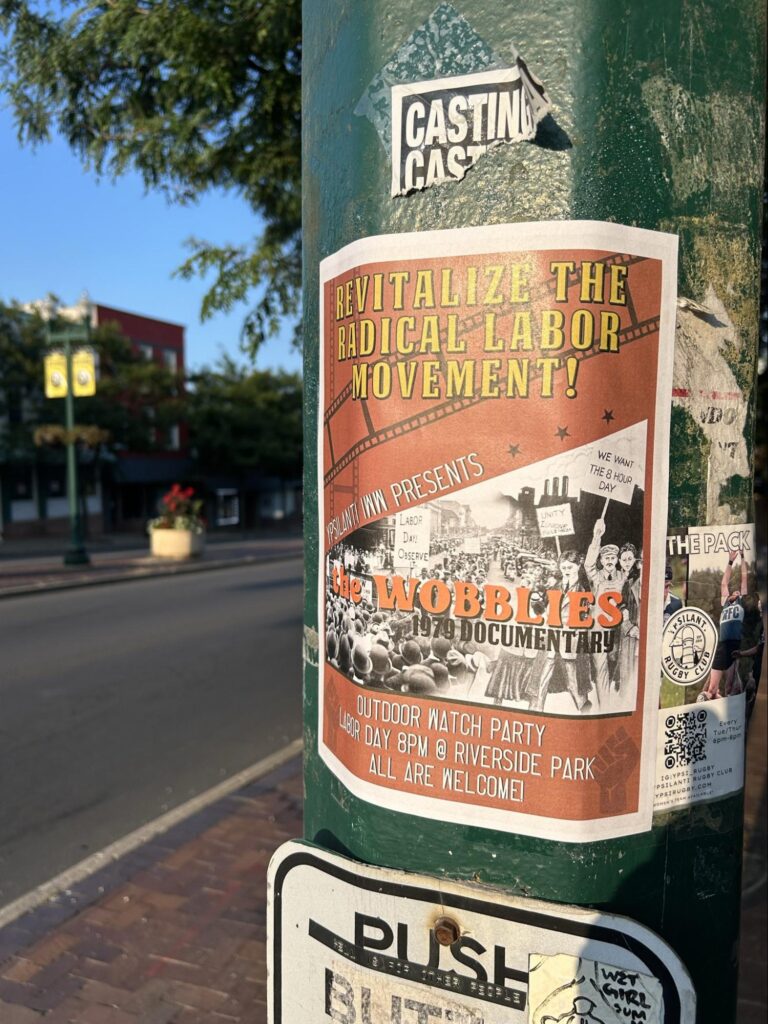
- Frequent wheatpasting (wheatpasting is the act of adhering propaganda to walls, posts, and construction barriers using a simple paste most often made from flour and water) campaigns with IWW agitprop
- Focusing on Internal Organizing: our branch had a lot of would-be organizers who just weren’t sure how to plug in! Activating our current membership boosted our capacity to do more.
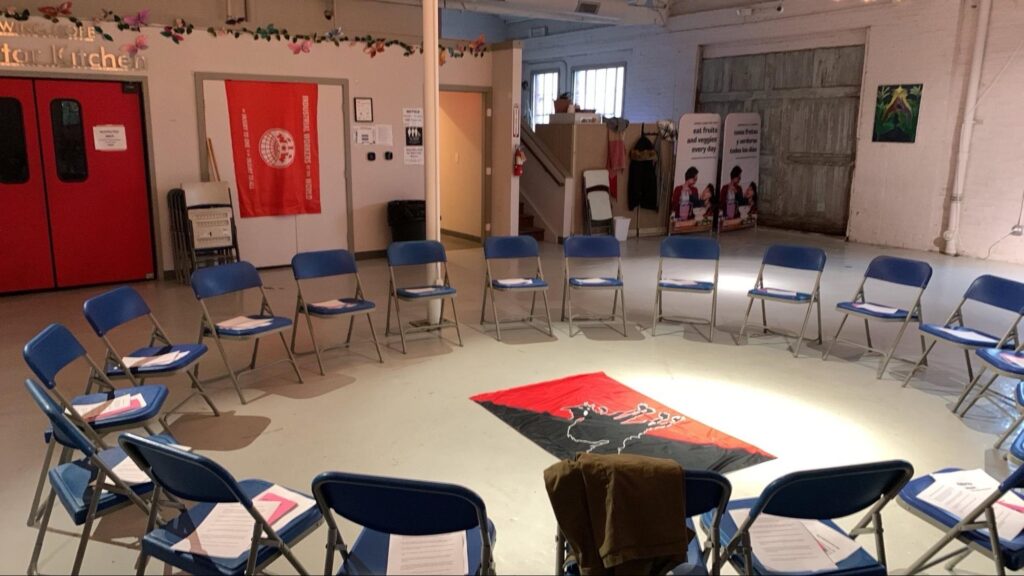
Not only are we putting ourselves out there, and working with the local community that we exist within, but we also established a solid onboarding process (which occurs 3 times a year) to orient the folks that sign up at these events to our union. We built the infrastructure to be able to handle an increase in membership that would inevitably result from putting ourselves out there. Because, just like those young UFCW staff organizers, the idea of solidarity unionism and industrial unionism is exciting to people! It makes sense! We just have to meet people where they’re at. And when they join us, we have to make them feel welcome by plugging them into our organizing.
Resisting Isolationism
The phrase in that last paragraph is “plugging them into our organizing…” As I said earlier, there is an unfortunate tendency of IWW branches being completely alienated or separate from the other organizing going on locally. I wonder if this is because a lot of branches just aren’t doing a lot of organizing. I’ve also spoken with former wobs who described their experience with the IWW as endless meetings: lots of talk, but no action. They kept showing up, but eventually left, because they didn’t feel like their local branches were up to anything that was significant or worth their time. We shouldn’t write these people or these experiences off!
As I write this article, I am reminded of an outstanding critique of the IWW written in 2017, A Gigantic Network of Narrow Streams, which is just as relevant, if not more:
“The task is not to build “the union,” to sign people up to the formal IWW, to reform it through superfluous bureaucracy, and to attempt mass high-profile campaigns on the job, but engage in subterranean guerilla warfare at work and in our communities to the extent that once mass struggle materializes we can more effectively fuse with that energy rather than be completely bypassed, or worse, marginalized by establishment forces…
Breaking out of our isolationism and preparing for future mass struggles are the most critical parts of how we can move past the current malaise and formalism pervading us. But rather than the passive policy of simply ignoring the formal IWW (although that would be a welcomed change), we should begin on the terms of strengthening the real IWW toward the end of new associations and new forms of organization in the long view.”
If mass struggle were to materialize in the United States tomorrow, without a doubt, the IWW broadly speaking would be bypassed or marginalized by other forces. We cannot afford to fetishize either the formal IWW or the historical IWW. Both are dead.
We must be able to move like water, we must be flexible and adaptable to our current conditions. We need to liberate ourselves from the formal IWW because it is one of the biggest obstacles holding us back from being a “feared name in the United States” once again. Largely speaking, to refer to the organizing pyramid once again, the IWW is operating as an upside down pyramid. We’re trying to practice democracy (or bureaucracy) and take direct action without understanding our relationship to the broader working class and without having real, genuine relationships with other organizers doing amazing work in our communities. Again, Tyler Zee says it better than I can:
“The formal IWW, like the rest of the Left, presently has no roots at all in the class, but it imagines that the dues it collects, the branches it charters, and the resolutions it passes will have some kind of effect on the vast layers of the class not currently within its ranks. It has attempted to recreate a form in a vacuum, one that was historically born from struggle and should have changed with the new political reality following the defeat of those struggles. But in the formal IWW, form is elevated above content, structure above struggle, because the assumption is that such form produces struggle. In fact, the opposite is the case: struggle is and has always been the determinant of the forms of organization.”
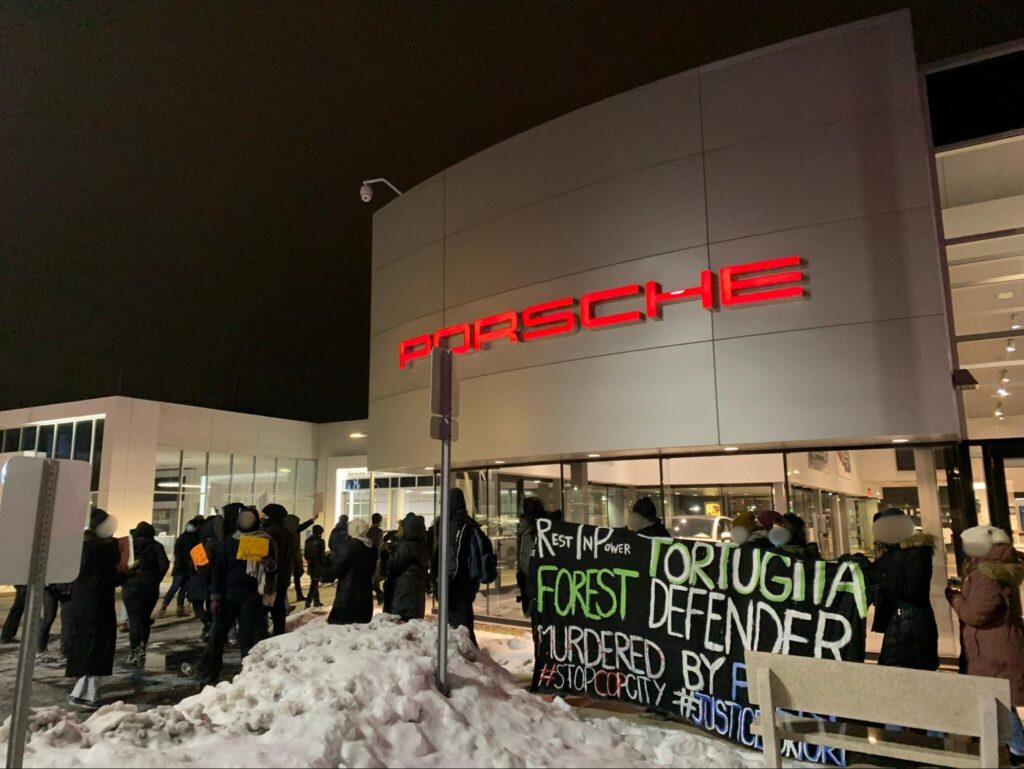
To conclude, we need to humble ourselves. Our wobbly ancestors gave us a bad ass history to look back on and celebrate. But, that IWW doesn’t exist anymore; we have to build it from scratch. Let’s put ourselves, our ideas, and our tactics out there for all to see and learn from, let’s re-create a modern-day wobbly “soapbox,” let’s show up to other groups’ events and show up for other struggles, let’s build relationships with local organizers (wobbly or not), let’s meet people where they’re at… wherever and whenever workers are organizing, the IWW should be there!
Has your branch been doing similar work? Reach out to [email protected], we would love to chat!
Let’s rebuild the IWW!
Disclaimer: The opinions expressed in this article are those of the author. They do not purport to represent that of the IWW or Industrial Worker as a whole.
This article originally appeared in the 2025 Autumn print edition of Industrial Worker.